
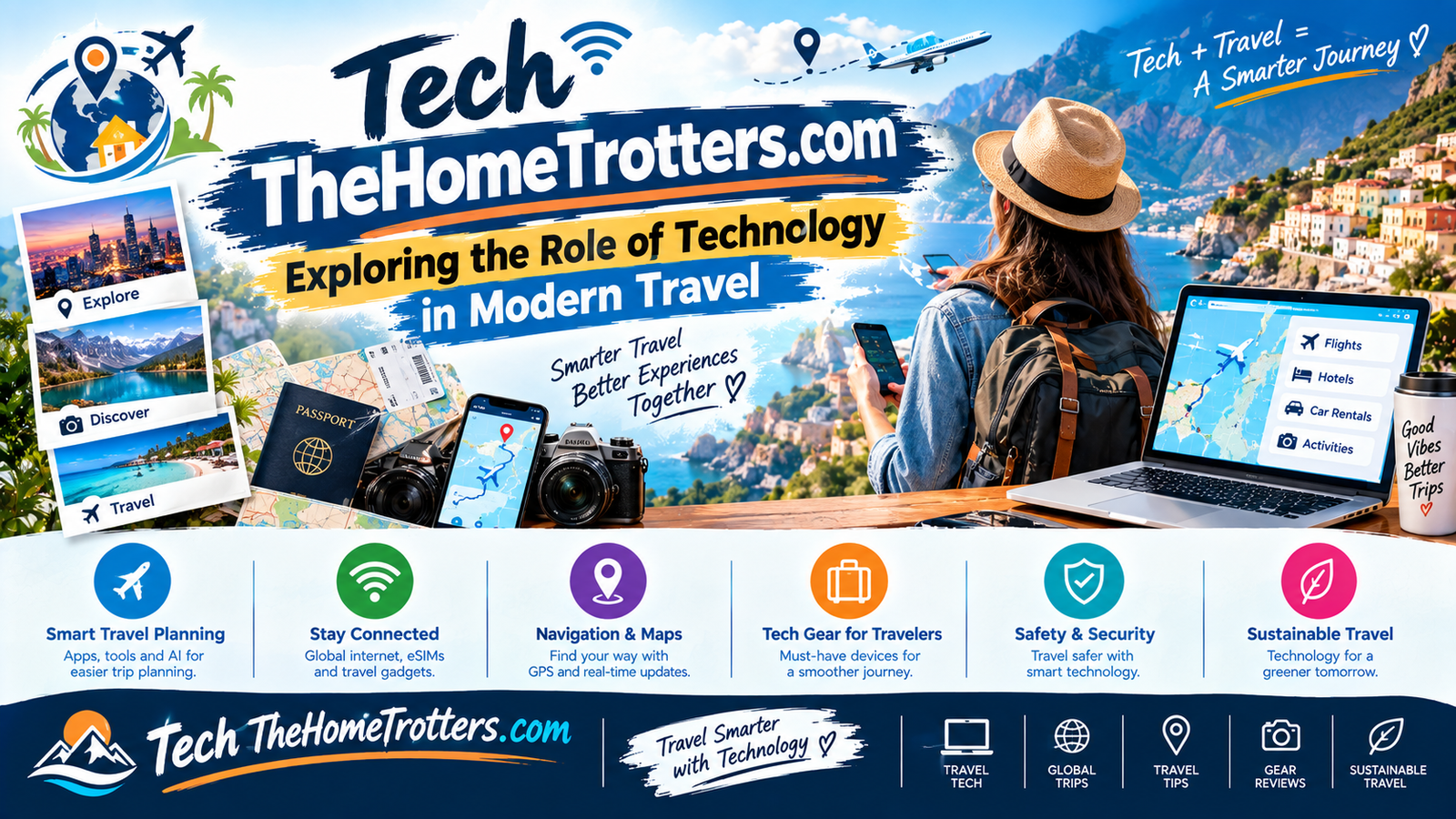
Technology has transformed the way people plan, experience, and remember their travels. From discovering new destinations online to booking flights, finding hotels, navigating unfamiliar streets, and sharing experiences with others, technology has become an essential part of modern travel. Tech TheHomeTrotters.com represents an interesting combination of technology and travel, highlighting how digital tools can make journeys easier, smarter, and more enjoyable.
For today’s travelers, having access to the right technology can make a significant difference. Smartphones, travel applications, online booking platforms, artificial intelligence, digital maps, and smart devices have changed traditional travel habits. Instead of relying entirely on printed maps, travel agents, or guidebooks, travelers can now access important information within seconds.
The Growing Importance of Technology in Travel
Technology has become an important part of nearly every stage of a journey. Before traveling, people use websites and applications to research destinations, compare prices, read reviews, and create itineraries. During the trip, technology helps travelers navigate cities, communicate with locals, make payments, and stay connected with family and friends.
The idea behind tech thehometrotters.com can be connected to this growing relationship between technology and travel. Modern travelers increasingly expect convenient digital solutions that reduce stress and save time.
Technology has also made travel information more accessible. A person planning a trip can learn about local attractions, weather conditions, transportation options, cultural customs, and safety considerations before leaving home.
Smartphones as Essential Travel Companions
The smartphone is arguably one of the most useful pieces of technology for travelers. A single device can replace a camera, map, calculator, translator, boarding pass, and communication tool.
Travelers can download maps for offline use, translate foreign languages, store digital tickets, check flight updates, and research restaurants. Mobile banking and payment applications also make it easier to manage expenses while traveling.
For those interested in tech thehometrotters.com, smartphones provide a perfect example of how technology has simplified the travel experience. Instead of carrying multiple devices and documents, travelers can manage many aspects of their journey from one compact device.
Online Travel Planning and Booking
Planning a trip has become considerably easier because of online technology. Travelers can search for flights, hotels, rental cars, activities, and restaurants without visiting a traditional travel agency.
Comparison websites allow users to evaluate different prices and services. Hotel platforms provide photographs, reviews, amenities, and location information, helping travelers make more informed decisions.
Digital booking systems also provide instant confirmations. Travelers can store reservation details on their phones and receive notifications when there are changes to flights or bookings.
This convenience demonstrates why technology is so valuable in the modern travel industry. It gives travelers greater control over their plans while allowing them to make decisions based on current information.
Artificial Intelligence and Personalized Travel
Artificial intelligence is becoming another major influence on travel technology. AI-powered tools can help travelers discover destinations, create itineraries, answer questions, and recommend activities based on individual interests.
For example, an AI travel assistant can suggest attractions according to a traveler’s available time and budget. It may also recommend restaurants, transportation options, or alternative destinations.
Personalization is especially valuable because every traveler has different preferences. Some people enjoy adventure and outdoor activities, while others prefer museums, shopping, food, or relaxation.
As AI technology continues to improve, websites and platforms associated with travel and technology, including tech thehometrotters.com, can provide increasingly useful information for people looking for smarter ways to travel.
Smart Navigation and Digital Maps
Getting lost in an unfamiliar destination can be frustrating, but digital maps have made navigation much easier. Applications can provide real-time directions, traffic information, public transportation routes, and estimated travel times.
GPS technology allows travelers to find nearby attractions, hotels, restaurants, and essential services. Offline maps are particularly useful when traveling internationally because they can reduce dependence on mobile data.
Digital navigation also helps travelers explore destinations independently. Instead of following a fixed tour schedule, visitors can create flexible routes and discover places at their own pace.
Technology for Safer Travel
Safety is another area where technology plays an important role. Travelers can use emergency applications, location-sharing features, digital identification systems, and real-time alerts to remain informed.
Weather applications can warn travelers about severe conditions, while airline applications provide updates about delays and cancellations. Translation tools can also help people communicate during emergencies in countries where they do not speak the local language.
Travelers should still use common sense and remain aware of their surroundings. Technology is a useful support tool, but it should not completely replace personal judgment.
Social Media and Digital Travel Inspiration
Social media has dramatically changed how people discover destinations. Photos, videos, travel blogs, and short-form content can introduce travelers to places they may never have considered visiting.
Travel influencers and online communities share recommendations about attractions, accommodations, food, and activities. This has created a new form of travel inspiration in which people often discover destinations through digital content.
However, travelers should verify information before making decisions. Popular online content may not always provide a complete or realistic picture of a destination.
Smart Devices for Comfortable Journeys
Wearable technology and smart travel accessories can also improve the travel experience. Smartwatches can provide navigation instructions, monitor activity, display notifications, and support contactless payments.
Noise-canceling headphones can make long flights more comfortable, while portable chargers help travelers keep their devices powered throughout the day.
Other useful technologies include electronic luggage trackers, compact travel adapters, smart locks, and portable Wi-Fi devices. These products can provide additional convenience and peace of mind.
The Future of Travel Technology
The future of travel is likely to become even more connected and personalized. Artificial intelligence, virtual reality, augmented reality, robotics, smart airports, and automated transportation could change how people experience destinations.
Virtual reality may allow travelers to explore hotels and attractions before booking. Augmented reality could provide historical information when visitors point their phones at landmarks. Smart airports may use automation to improve check-in, security, and baggage handling.
At the same time, privacy and cybersecurity will become increasingly important. Travelers need to understand how their personal information is collected and protected when using digital travel services.
Why Tech Matters to Modern Travelers
The relationship between technology and travel is no longer optional. Digital tools have become an essential part of researching, planning, booking, navigating, and enjoying trips.
The concept of tech thehometrotters.com reflects the growing demand for useful technology-related information among modern travelers. By understanding the available tools and using them responsibly, travelers can save time, improve convenience, and make better-informed decisions.
Technology does not replace the excitement of discovering new places. Instead, it can make exploration easier and more accessible. The best travel technology works quietly in the background, helping people focus on the experiences that make their journeys memorable.
Conclusion
Technology has completely changed modern travel, from the initial planning stage to the journey home. Smartphones, online booking systems, artificial intelligence, digital maps, social media, wearable devices, and smart travel accessories all contribute to a more convenient travel experience.
As technology continues to develop, travelers will have access to even more powerful tools for planning and exploring the world. For anyone interested in the connection between travel and digital innovation, tech thehometrotters.com can serve as a useful keyword and topic for exploring this rapidly changing landscape.
Ultimately, technology should be viewed as a travel companion rather than a replacement for authentic experiences. When used wisely, it allows travelers to spend less time dealing with logistical challenges and more time enjoying destinations, cultures, people, and unforgettable adventures.