
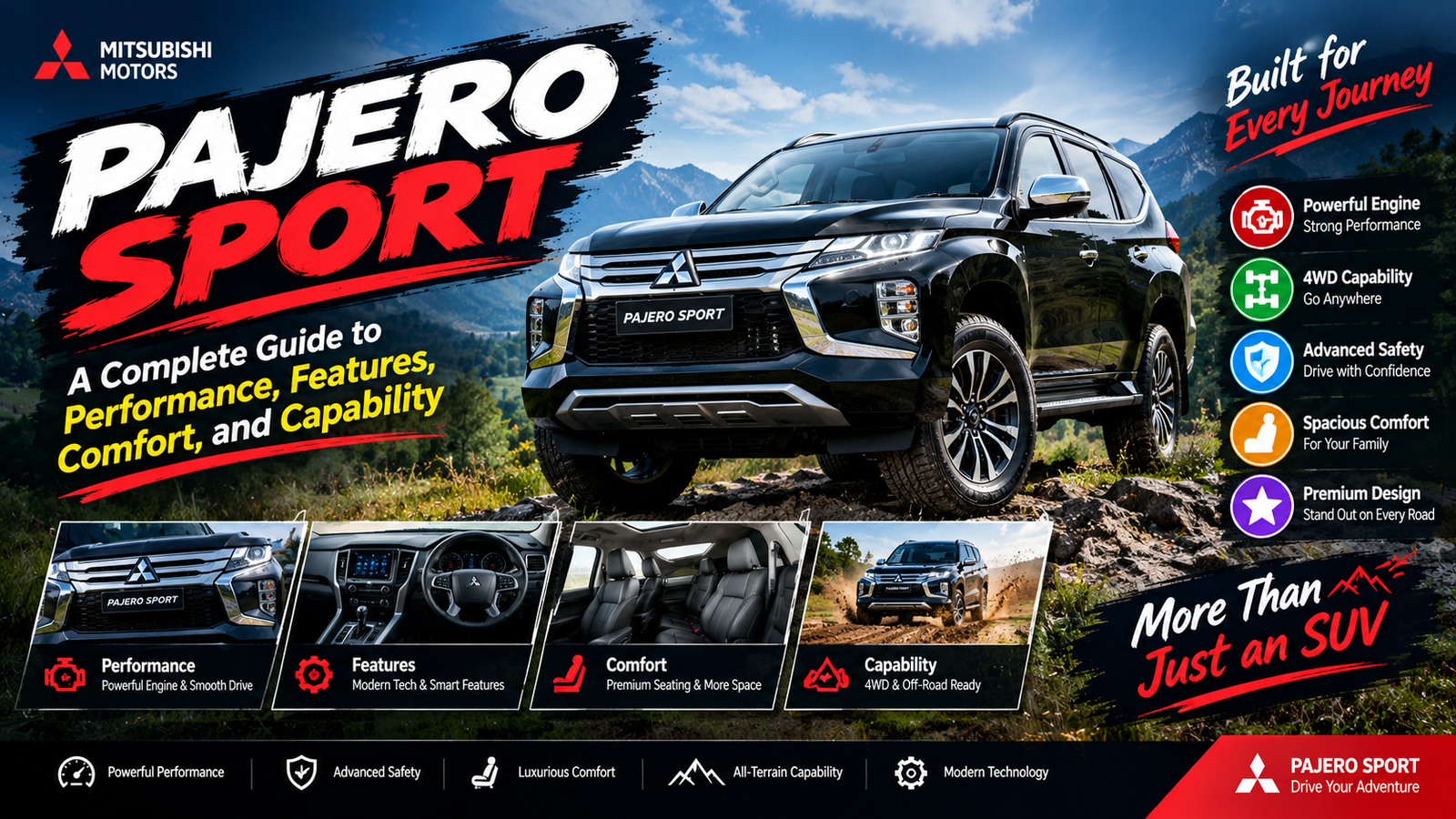
The Pajero Sport is a popular midsize SUV known for its powerful performance, bold exterior design, comfortable interior, and impressive off-road capabilities. Manufactured by Mitsubishi Motors, this vehicle combines the practicality of a family SUV with the toughness needed for challenging road conditions. It is designed for drivers who want a versatile vehicle for daily commuting, long-distance travel, family adventures, and outdoor exploration.
Whether you are considering buying a new or used SUV, the Pajero Sport is worth exploring because of its combination of durability, technology, and driving comfort. Its features and specifications vary depending on the model year and market, but its overall focus remains on providing a capable and practical driving experience.
Overview of the Pajero Sport
The Mitsubishi Pajero Sport is a midsize sport utility vehicle developed for people who need more than an ordinary passenger car. It offers a commanding driving position, generous passenger space, and a robust construction suitable for different driving environments.
Depending on the generation and market, the Pajero Sport may be available with diesel or petrol engine options, automatic or manual transmissions, and rear-wheel-drive or four-wheel-drive configurations. Many versions are particularly popular among drivers who value diesel torque and the ability to handle rough terrain.
The SUV is also known by different names in certain markets, including Mitsubishi Montero Sport and Mitsubishi Challenger in some regions and generations. Its combination of practicality and rugged styling has helped it establish a strong reputation among SUV enthusiasts.
Exterior Design and Styling
One of the most noticeable features of the Pajero Sport is its distinctive exterior design. Mitsubishi has given the SUV a bold appearance with a prominent front grille, sharp headlamp styling, sculpted body panels, and a strong road presence.
The front fascia varies between model years, but many versions feature the brand’s Dynamic Shield design language. This styling approach gives the vehicle a modern and recognizable appearance while maintaining its rugged character.
Other exterior highlights may include:
- Stylish alloy wheels.
- LED daytime running lights.
- Projector or LED headlamps, depending on the variant.
- Roof rails on selected models.
- Body-coloured exterior mirrors and door handles.
- Rear combination lamps with distinctive styling.
- High ground clearance for uneven roads.
These design elements make the Pajero Sport suitable for both urban environments and outdoor adventures. Its elevated body and muscular proportions also give drivers a commanding view of the road.
Engine and Performance
Engine performance is an important consideration when choosing an SUV, particularly for drivers who travel long distances or frequently encounter difficult roads. The Pajero Sport is offered with different powertrains depending on the country and model year.
Many modern versions feature a turbocharged diesel engine, commonly a 2.4-litre four-cylinder unit in several markets. Certain earlier models and regional versions have been offered with other diesel or petrol engines.
The turbocharged diesel configuration is valued for its strong low-speed torque, which can be helpful when climbing hills, carrying passengers, towing within approved limits, or driving over uneven surfaces.
Performance characteristics generally include:
- Strong pulling power at low engine speeds.
- Suitable acceleration for everyday driving.
- Practical performance for highway journeys.
- Engine options designed for a balance of power and efficiency.
- Transmission choices that vary by market and trim level.
Actual horsepower, torque, fuel consumption, and acceleration depend on the specific version. Buyers should check the manufacturer’s specifications for the model available in their country.
Interior Comfort and Cabin Space
The interior of the Pajero Sport is designed to accommodate families and individuals who need a comfortable vehicle for everyday use. Depending on the variant, the SUV can provide seating for up to seven occupants.
The cabin generally features a practical dashboard layout, supportive seats, convenient storage spaces, and controls designed to be accessible to the driver. Higher trim levels may offer leather upholstery, power-adjustable front seats, dual-zone climate control, and other comfort features.
Passenger comfort is particularly important during long journeys. The elevated seating position helps provide good visibility, while the cabin layout supports a relaxed driving experience.
Interior highlights may include:
- Spacious front seating.
- A second row suitable for family passengers.
- An optional or standard third row, depending on the model.
- Multiple storage compartments.
- Adjustable steering-wheel settings on selected variants.
- Rear air-conditioning outlets on many versions.
- Folding rear seats for additional luggage space.
Although the third row adds versatility, available legroom and luggage capacity can be limited when all seats are occupied. Families should inspect the actual configuration before purchasing.
Technology and Infotainment Features
Modern SUV buyers expect convenient technology, and many Pajero Sport variants provide useful infotainment and connectivity features.
Depending on the model year and specification, the vehicle may include a touchscreen multimedia system, smartphone connectivity, Bluetooth, USB ports, steering-wheel audio controls, and a multifunction driver information display.
Selected models may support Apple CarPlay and Android Auto, allowing compatible smartphones to connect with the infotainment system. These features can make navigation, communication, and music playback more convenient.
Additional technology may include:
- Rear-view camera systems.
- Parking sensors.
- Keyless entry and push-button start.
- Automatic climate control.
- Cruise control.
- Multi-information displays.
- Navigation systems on selected variants.
Technology availability differs across markets and trim levels. Buyers should verify whether their preferred vehicle includes the features they need rather than assuming that every Pajero Sport has the same equipment.
Safety and Driver Assistance
Safety is another important factor when evaluating the Pajero Sport. Depending on the generation and variant, Mitsubishi has equipped the SUV with a combination of passive safety systems and electronic driver assistance features.
Common safety equipment may include multiple airbags, anti-lock braking systems, electronic brake-force distribution, electronic stability control, traction control, and hill-start assistance.
Selected versions may also include more advanced driver assistance systems, such as forward collision mitigation, blind-spot monitoring, rear cross-traffic alert, and adaptive cruise control.
Important safety features to consider include:
- Airbags for driver and passengers.
- Anti-lock braking system (ABS).
- Electronic stability control.
- Traction control.
- Hill-start assist.
- Rear parking sensors or a reversing camera.
- Advanced driver assistance systems on selected models.
The exact equipment depends on the market, model year, and trim. Before buying a used vehicle, check its service history, airbag condition, safety recalls, and overall mechanical condition. A professional inspection can help identify problems that may not be obvious during a test drive.
Off-Road Capability
The Pajero Sport is particularly attractive to drivers who want an SUV capable of travelling beyond smooth city roads. Selected four-wheel-drive versions offer features intended to improve traction on loose gravel, mud, sand, and other challenging surfaces.
Depending on the configuration, these features may include a selectable four-wheel-drive system, low-range gearing, a rear differential lock, and Mitsubishi’s Super Select 4WD-II system. Availability varies by market and model.
The SUV’s ground clearance and robust suspension design can help it handle rough roads, while suitable tyres and the correct driving mode can improve traction in demanding conditions.
Its off-road strengths may include:
- High ground clearance.
- Four-wheel-drive availability.
- Low-range gearing on equipped models.
- Hill-descent assistance on selected variants.
- Traction-management technology.
- A body and suspension setup designed for varied terrain.
However, off-road capability is not identical across all versions. Rear-wheel-drive models should not be assumed to offer the same performance as four-wheel-drive variants. Drivers should also consider tyre condition, water depth, ground conditions, and safe driving practices before attempting difficult routes.
Fuel Economy and Running Costs
Fuel economy is a major consideration for SUV owners, especially those who commute regularly or travel long distances. The Pajero Sport’s consumption depends on its engine, transmission, drivetrain, vehicle load, maintenance, and driving conditions.
Diesel versions can offer a practical balance of torque and fuel efficiency for a vehicle of this size. Nevertheless, actual consumption may increase in congested traffic, during frequent acceleration, or when driving over challenging terrain.
To manage running costs, owners should:
- Maintain the engine according to the recommended schedule.
- Use the correct engine oil and approved filters.
- Check tyre pressure regularly.
- Keep the air filter clean.
- Avoid unnecessary heavy loads.
- Drive smoothly and maintain sensible speeds.
- Inspect the cooling and braking systems periodically.
Fuel prices, spare-parts availability, insurance, taxes, and workshop charges also affect the total cost of ownership. Buyers should research local maintenance expenses before choosing a particular model.
Advantages of the Pajero Sport
The Pajero Sport offers several benefits for drivers who need a vehicle that can handle multiple responsibilities. Its strengths depend on the selected variant, but many buyers appreciate its combination of passenger capacity, rugged construction, and available four-wheel-drive technology.
Key advantages include:
- Versatility: Suitable for daily commuting, family travel, and outdoor activities.
- Strong torque: Many diesel variants provide useful pulling power.
- Practical seating: Selected models accommodate up to seven occupants.
- Off-road options: Four-wheel-drive versions can handle demanding terrain when properly equipped.
- Commanding driving position: The elevated seating position improves the driver’s view of the road.
- Useful technology: Modern variants offer infotainment and convenience features.
- Flexible cargo space: Folding rear seats can increase luggage capacity.
These qualities make the Pajero Sport an appealing choice for buyers who want an SUV that can serve both practical and recreational needs.
Disadvantages to Consider
Although the Pajero Sport has several strengths, it may not be the ideal vehicle for every buyer. Its size, running costs, and driving characteristics should be considered before making a purchase.
Potential disadvantages include:
- Higher fuel consumption than many smaller passenger cars.
- A relatively large footprint that can make parking difficult in crowded areas.
- Limited luggage space when all three seating rows are in use.
- Potentially higher tyre, insurance, and maintenance expenses.
- A firmer ride than some comfort-focused crossovers, depending on the model and road surface.
- Different equipment levels across markets, which can complicate comparisons.
A test drive is the best way to determine whether its ride comfort, visibility, steering, and overall size suit your daily needs.
Is the Pajero Sport Suitable for Families?
The Pajero Sport can be a practical option for families who need passenger capacity, flexible seating, and the ability to travel beyond city limits. Its elevated driving position and available safety technology may also appeal to parents.
Families should evaluate the space available in each row, the ease of accessing the third row, and the amount of luggage room remaining when all seats are occupied. Child-seat compatibility and rear-seat comfort are also worth checking.
For households that regularly travel with several passengers, the Pajero Sport can provide useful flexibility. However, families who mainly drive in crowded urban areas may prefer a smaller SUV with easier parking and lower operating costs.
Buying a New or Used Pajero Sport
Choosing between a new and used Pajero Sport depends on your budget, desired features, and willingness to maintain an older vehicle.
A new model may offer an updated infotainment system, a manufacturer warranty, modern safety equipment, and a known service history. A used vehicle may cost less initially, but its condition and maintenance record require careful evaluation.
Before purchasing, consider the following checklist:
- Verify the model year, trim level, and engine specification.
- Review the service and maintenance history.
- Inspect the engine, transmission, suspension, and brakes.
- Check for accident damage, corrosion, and signs of poor repairs.
- Test all electronic and safety features.
- Examine the four-wheel-drive system if fitted.
- Check for outstanding recalls where applicable.
- Compare local prices and the availability of genuine spare parts.
- Arrange a professional mechanical inspection.
- Confirm ownership documents and legal requirements.
A well-maintained used Pajero Sport can be an attractive option, but a low purchase price should never replace a thorough inspection.
Who Should Buy the Pajero Sport?
The Pajero Sport may suit buyers who need a combination of passenger capacity, highway comfort, and rugged capability. It is particularly worth considering for families, outdoor enthusiasts, and drivers who regularly travel on rural roads.
It may also appeal to people who prefer a traditional SUV format over a smaller urban crossover. Buyers who frequently tow equipment should confirm the vehicle’s approved towing capacity and ensure that the selected variant is properly equipped.
On the other hand, people who primarily drive short distances in congested cities may find a smaller vehicle more economical and easier to manoeuvre.
The best choice ultimately depends on individual priorities, driving habits, local road conditions, and budget.
Conclusion
The Pajero Sport is a versatile midsize SUV that combines rugged styling, practical interior space, useful technology, and capable performance. Depending on the model and configuration, it can serve as a family vehicle, a long-distance touring SUV, or a capable companion for off-road adventures.
Its major attractions include available diesel powertrains, optional four-wheel-drive systems, flexible seating, and a commanding driving position. However, buyers should also consider fuel consumption, maintenance costs, parking convenience, and the features included in their chosen variant.
Before purchasing, compare the specifications of different model years, arrange a test drive, and inspect the vehicle carefully. By matching the Pajero Sport’s capabilities to your requirements, you can make a more informed decision and select the version that best suits your lifestyle.