
Introduction
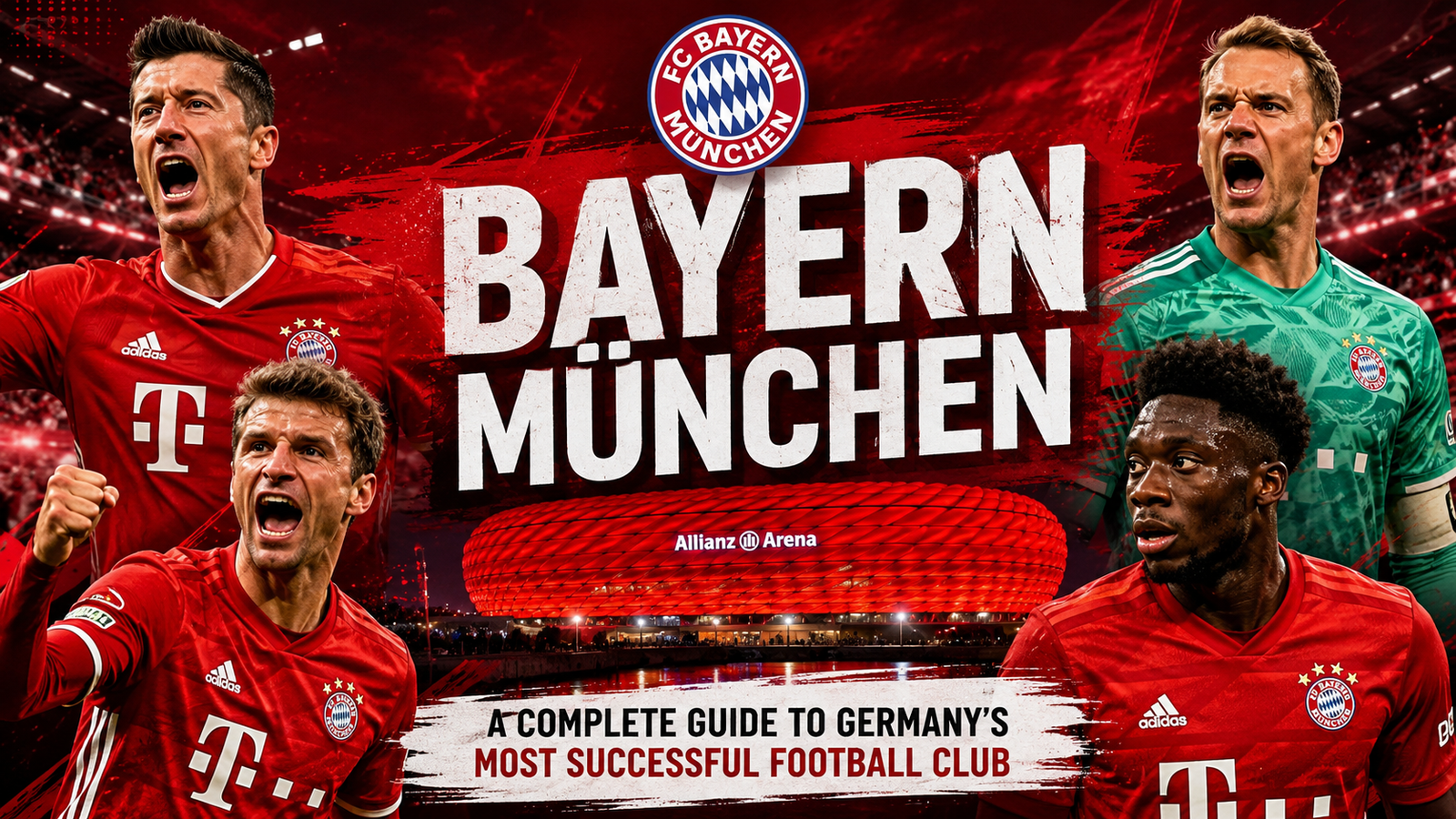
Bayern München, commonly known in English as Bayern Munich, is one of the most famous and successful football clubs in the world. Based in Munich, Germany, the club has played a dominant role in German football for decades and has also established itself as a major force in European competition. Known for its winning mentality, world-class players, passionate supporters, and iconic red colors, Bayern München has become a global sporting brand.
The club competes in the Bundesliga, Germany’s top football division. Bayern has consistently challenged for domestic trophies while regularly competing against Europe’s strongest clubs in the UEFA Champions League. Its history includes legendary players, influential coaches, memorable victories, and periods of remarkable dominance.
History of Bayern München
Bayern München was founded in 1900 by a group of football enthusiasts in Munich. The club gradually developed into one of Germany’s leading football teams. Although its early years were relatively modest, Bayern began establishing a stronger reputation during the middle of the 20th century.
The club’s major breakthrough came in the 1960s. Bayern developed an outstanding generation of players, including Franz Beckenbauer, Gerd Müller, and Sepp Maier. This group helped transform the club into a European powerhouse.
During the 1970s, Bayern achieved international success by winning the European Cup three consecutive times from 1974 to 1976. These victories cemented the club’s reputation beyond Germany and created the foundation for its modern identity.
Bayern München in the Bundesliga
Bayern München is synonymous with success in German domestic football. The Bundesliga has frequently been dominated by Bayern, particularly during the modern era.
The club’s domestic success has been built on several important factors. Strong youth development, excellent recruitment, financial stability, experienced coaching, and a professional sporting structure have allowed Bayern to maintain a high level of performance.
Bayern’s domestic trophy collection includes numerous Bundesliga championships and DFB-Pokal victories. Its consistency is particularly impressive because competing successfully over many decades requires more than individual talented players. The club has repeatedly adapted to changes in tactics, management, technology, and football economics.
European Success
Bayern München is also one of Europe’s most successful football clubs. Its European history is highlighted by multiple European Cup and UEFA Champions League victories.
The first great European era arrived in the 1970s, when Bayern won the European Cup three times in succession. Decades later, the club returned to the top of European football with another Champions League triumph in 2001.
One of Bayern’s most memorable modern achievements came in 2013, when the club won the Champions League as part of a historic treble. Bayern later achieved another Champions League victory in 2020, completing another treble during an extraordinary season.
These achievements demonstrate the club’s ability to compete at the highest level even as European football continues to evolve.
Allianz Arena
The Allianz Arena is the home stadium of Bayern München and one of the most recognizable football stadiums in the world.
Located in Munich, the stadium is famous for its distinctive exterior, which can be illuminated in different colors. Its modern design, impressive atmosphere, and large capacity make it an important part of the Bayern experience.
On match days, thousands of supporters gather around the stadium to support the team. The combination of the stadium’s architecture and Bayern’s passionate fan base creates an unforgettable atmosphere.
Legendary Bayern München Players
Bayern’s history has been shaped by many outstanding footballers. Franz Beckenbauer is one of the most important figures in the club’s history. Known as “Der Kaiser,” he was an exceptional defender and leader who helped Bayern achieve European glory.
Gerd Müller was another legendary player. Famous for his incredible goalscoring ability, Müller became one of the most feared strikers of his generation.
Other important Bayern players across different eras include Karl-Heinz Rummenigge, Lothar Matthäus, Oliver Kahn, Philipp Lahm, Bastian Schweinsteiger, Thomas Müller, and Manuel Neuer.
International stars such as Arjen Robben, Franck Ribéry, Robert Lewandowski, and many others have also played important roles in the club’s modern success.
Bayern München’s Playing Style
Bayern München has traditionally been associated with attacking football, technical quality, possession, and aggressive pressing. However, its tactical identity has changed under different managers.
Some Bayern teams have relied heavily on possession and positional play, while others have emphasized fast transitions and intense pressing. The club’s ability to recruit technically gifted players allows its coaches to develop flexible tactical systems.
The team’s style often involves controlling possession, creating chances through the wings and central areas, and applying pressure after losing the ball. Bayern’s strong squad depth also allows it to compete across multiple competitions during a long season.
Famous Rivalries
Bayern München has several important rivalries in German football. One of the most significant is with Borussia Dortmund. Matches between the two clubs are often associated with high-quality football and major Bundesliga battles.
The rivalry became especially important during the 2010s, when Dortmund emerged as Bayern’s strongest domestic challenger under Jürgen Klopp.
Bayern also has historic rivalries with clubs such as 1860 Munich, reflecting the city’s football history. Although the competitive importance of different rivalries has changed over time, these matches remain meaningful to supporters.
Youth Development and Club Philosophy
An important part of Bayern’s long-term success is its approach to player development. The club has invested heavily in youth football and has produced or developed players capable of performing at the highest level.
The Bayern philosophy combines experienced international stars with talented young footballers. This approach can help the club maintain continuity when older players leave or retire.
Players such as Thomas Müller and Philipp Lahm demonstrate how important academy development can be to Bayern’s identity. Young players who reach the first team can become closely connected with supporters and the club’s culture.
Global Popularity
Bayern München has a huge international following. Supporters can be found throughout Europe, Asia, Africa, North America, South America, and other parts of the world.
The club’s international popularity has been strengthened by its success in the Champions League and the global visibility of its players. Bayern’s red shirts, distinctive crest, and famous stadium are recognized by football fans worldwide.
Social media, international tours, broadcasting, and global fan clubs have also helped the club connect with supporters outside Germany.
Bayern München and Modern Football
Modern football is increasingly influenced by technology, financial investment, analytics, sports science, and global marketing. Bayern München has adapted to these changes while maintaining its traditional identity.
The club’s ability to remain competitive is closely linked to its professional management structure and strong commercial position. Bayern has developed partnerships and commercial relationships around the world while continuing to prioritize sporting performance.
At the same time, the club faces challenges from other European giants with substantial financial resources. Maintaining competitiveness requires intelligent recruitment, tactical innovation, and continued investment in infrastructure and player development.
Why Bayern München Is So Successful
There is no single reason for Bayern’s success. Instead, several factors work together.
First, the club has a strong football culture and a clear identity. Second, it has benefited from excellent players and coaches across different generations. Third, its financial and organizational stability has allowed it to plan for the long term.
Bayern also has experience competing under pressure. Winning regularly creates expectations, but the club has developed systems designed to handle those expectations.
Its ability to combine tradition with modernization is another major advantage. Bayern respects its history while continuously adapting to changes in football.
Conclusion
Bayern München is far more than a successful German football club. It is an institution with a rich history, a global fan base, legendary players, and a tradition of excellence.
From its early development in Munich to its European triumphs and modern Bundesliga dominance, Bayern has repeatedly demonstrated why it belongs among football’s elite clubs. The stories of Beckenbauer, Müller, Rummenigge, Lahm, Neuer, Müller, and many other stars have become part of football history.
The club’s iconic Allianz Arena, passionate supporters, competitive spirit, and commitment to success continue to attract millions of fans. As football evolves, Bayern München is likely to remain an influential force in Germany and Europe.
For football enthusiasts, understanding Bayern München means exploring one of the game’s greatest sporting institutions—its history, achievements, players, culture, and continuing ambition to compete at the highest level.